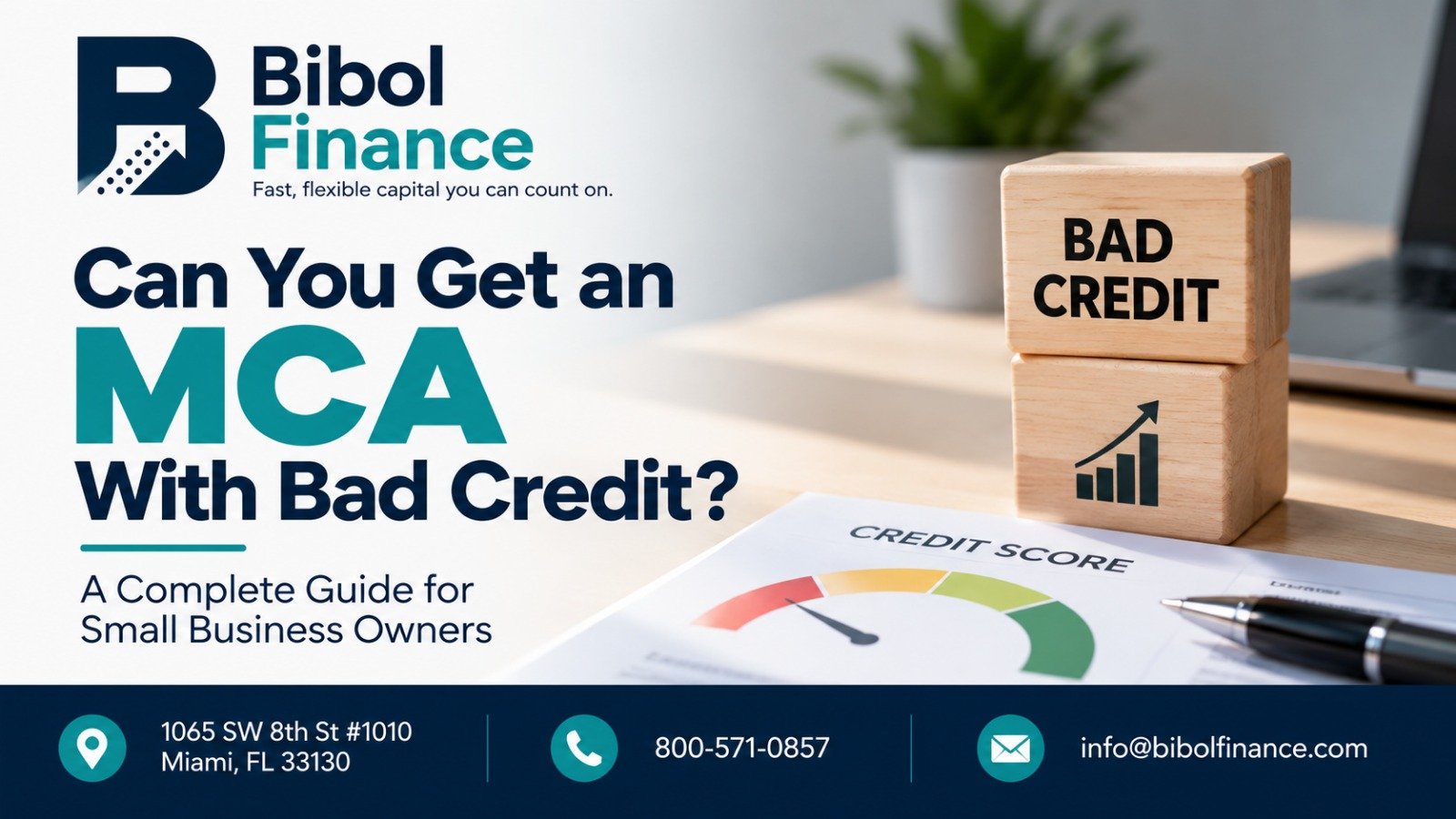
Introduction: Can Bad Credit Stop Your Business From Getting Funding?
Running a small business is not always easy. Some months bring strong sales, while others come with unexpected expenses, delayed customer payments, and pressure to keep everything running smoothly.
When your business needs additional working capital, your credit score can become a major concern. Perhaps you have missed a few payments in the past, experienced financial difficulties, or struggled to qualify for a traditional business loan.
So, can you get a merchant cash advance (MCA) with bad credit?
Yes, it may be possible. Some merchant cash advance providers consider businesses with lower credit scores, particularly when they demonstrate consistent revenue and regular business transactions. However, approval is never guaranteed, and every provider has its own eligibility criteria.
Understanding how an MCA works, what providers evaluate, and what the funding may cost can help you decide whether this option makes sense for your business.
1. What Is a Merchant Cash Advance?
A merchant cash advance is a type of business financing in which a provider advances money to a business in exchange for an agreed amount of future business receipts.
Unlike a traditional term loan, an MCA is generally structured around the purchase of future receivables. Depending on the agreement, repayments may be collected as a percentage of card sales or through another agreed collection arrangement.
Small businesses may explore merchant cash advances to cover expenses such as:
- Purchasing inventory and supplies.
- Managing temporary cash flow shortages.
- Repairing essential equipment.
- Covering marketing and operating expenses.
- Supporting short-term business opportunities.
For example, imagine that a retail store has steady customer demand but needs additional inventory before a busy sales period. If traditional financing is unavailable, the owner may investigate alternative business funding, including an MCA.
However, the business should assess whether the expected revenue can support the cost of the advance and its repayment obligations.
2. How Does Bad Credit Affect MCA Approval?
A low credit score can make traditional business financing more difficult to obtain. However, merchant cash advance providers may evaluate several aspects of a business rather than relying exclusively on personal credit history.
Depending on the provider, these factors may include:
Monthly business revenue: Consistent revenue may demonstrate that the business generates money from its operations.
Bank account activity: Recent business bank statements can help providers understand deposits, expenses, balances, and cash flow patterns.
Time in business: An established operating history may provide more information about the company’s financial performance.
Sales consistency: Predictable transactions may help a provider evaluate the business’s ability to support future collections.
Existing financial obligations: Current loans, advances, and other repayments can affect the business’s available cash flow.
A business with bad credit but consistent revenue may have more financing options than a business with both poor credit and unstable sales. Nevertheless, each application is assessed individually, and some providers may have minimum credit score requirements.
3. What Are the Typical Merchant Cash Advance Requirements?
There is no universal set of MCA eligibility requirements. Different providers have different standards, and the amount of funding available depends on the applicant’s circumstances.
Common application requirements may include:
- A valid business bank account.
- Recent business bank statements.
- Evidence of business revenue.
- Basic business ownership and identification documents.
- Information about existing financing obligations.
- A minimum period of business operation, where required.
Some providers may request additional documents or financial information before making a decision.
Before applying, prepare accurate records of your business income, expenses, and current obligations. This can help you understand your financial position and make the application process more straightforward.
Avoid applying based on the assumption that bad credit will automatically be overlooked. Ask the provider about its eligibility criteria and whether your business is likely to meet them.
4. How to Improve Your Chances of Getting an MCA With Bad Credit
Although no strategy guarantees approval, preparing your application carefully may help you present a clearer picture of your business.
Maintain consistent business banking records
Use your business bank account for business transactions and keep accurate records of deposits and expenses. Providers may review recent statements when evaluating an application.
Demonstrate stable revenue
If your business generates regular sales, organize the records that show this activity. Consistent revenue may be an important factor in an MCA provider’s assessment.
Reduce unnecessary financial commitments
Review existing debt and recurring expenses. Excessive repayment obligations may leave less cash available for daily operations.
Be transparent about your credit history
Provide accurate information when requested. Do not misrepresent revenue, existing debts, or business details to improve your chances of approval.
Request an appropriate funding amount
Borrowing more than your business needs can increase financial pressure. Estimate the actual funding gap and assess whether your business can afford the proposed repayment structure.
5. Understand MCA Rates, Fees, and Repayment Before Accepting an Offer
An MCA can provide access to working capital, but it may also carry a significant cost. Businesses with weaker credit profiles may receive less favorable offers, depending on the provider and the overall risk assessment.
Before signing an agreement, review the following:
- Factor rate: The multiplier used to calculate the agreed repayment amount.
- Total repayment: The full amount the business must pay under the agreement.
- Fees: Any origination, administrative, or other applicable charges.
- Collection frequency: Whether collections occur daily, weekly, or through another arrangement.
- Effect on cash flow: How collections may affect payroll, inventory, rent, and other expenses.
- Contract terms: Any applicable default provisions, guarantees, or other obligations.
For example, if a provider advances $10,000 at a factor rate of 1.30, the calculated purchased receivables amount would be $13,000 before considering any separate fees or contractual adjustments.
That means the difference between the advance and the calculated repayment amount is $3,000. This example illustrates the arithmetic only, not a real offer or a complete measure of the financing’s annualized cost.
A factor rate is not the same as an APR. Depending on how quickly the advance is repaid, the effective annualized cost may be substantially different. Compare the full cost and repayment terms with other financing options before deciding.
6. Are There Alternatives to an MCA for Businesses With Bad Credit?
An MCA is only one possible financing option. Depending on your business’s financial position, you may also investigate:
Business line of credit: Provides access to an approved credit limit, subject to eligibility and the lender’s terms.
Invoice financing: May allow businesses with eligible unpaid invoices to access funds before customers pay.
Secured business financing: Some lenders offer financing backed by eligible collateral, although collateral may be at risk if the agreement is breached.
Equipment financing: May help eligible businesses purchase equipment, with the equipment often serving as collateral.
Supplier payment arrangements: Negotiating payment terms with suppliers may help reduce immediate pressure on available cash.
Compare eligibility, total cost, repayment obligations, and potential risks. The best option is the one that addresses your business’s needs without creating an unmanageable financial burden.
7. When Should You Consider a Merchant Cash Advance?
An MCA may be worth investigating when your business needs working capital, generates regular revenue, and has a realistic plan for managing the associated collections.
It may be less suitable if your business is experiencing a sustained decline in sales, already struggles to meet essential expenses, or cannot reasonably afford additional repayments.
Before accepting an advance, prepare a cash flow forecast. Include expected revenue, payroll, rent, taxes, supplier payments, and existing financial obligations.
If the projected cash flow leaves too little room for unexpected expenses, consider alternatives or seek advice from a qualified financial professional.
Frequently Asked Questions
Can I get a merchant cash advance with a 500 credit score?
Possibly. Some providers may consider applicants with low credit scores, while others have minimum credit requirements. Revenue, banking activity, time in business, and existing obligations may also influence eligibility.
Is an MCA easier to get than a traditional business loan?
Some MCA providers use different underwriting criteria from traditional lenders. However, approval requirements vary, and an MCA is not automatically easier to obtain or less expensive.
How quickly can I receive MCA funding?
Funding timelines vary by provider, application completeness, verification requirements, and contract terms. Confirm the expected timeline directly with the provider rather than relying on a guaranteed same-day approval claim.
Does applying for an MCA affect my credit score?
The effect depends on the provider’s credit-check process and how the application is handled. Ask whether the provider uses a soft or hard credit inquiry and how the agreement may affect credit reporting.
Can a startup with bad credit qualify for an MCA?
Eligibility depends on the provider’s requirements and the business’s revenue history. A startup without sufficient operating revenue may have difficulty qualifying, even if some providers accept lower credit scores.
Conclusion: Explore Your Business Funding Options With Confidence
Having bad credit does not necessarily mean that every business funding option is unavailable. A merchant cash advance may be an option for certain businesses with consistent revenue, even when traditional financing is difficult to obtain.
However, approval is not guaranteed, and access to capital should not come at the expense of your business’s financial stability.
Review your revenue, prepare your financial documents, compare available offers, and calculate the total repayment cost before making a decision. Most importantly, make sure the proposed collections are affordable alongside payroll, supplier payments, taxes, and other essential expenses.
Looking for business funding options? Contact BibolFinance to discuss your business’s financing needs and learn more about the options that may be available to you. Eligibility, approval, costs, and terms depend on your business qualifications and the applicable agreement.
Contact BibolFinance
BibolFinance
Address: 1065 SW 8th St #1010, Miami, FL 33130
Tel: 800-571-0857
Email: info@bibolfinance.com
Contact BibolFinance to discuss your business funding requirements and explore potential financing options. Funding is subject to eligibility, underwriting, and applicable terms and conditions.