Introduction
Running a small business in the United States comes with many responsibilities. Business owners must manage payroll, pay suppliers, maintain inventory, cover rent, and handle unexpected expenses. Sometimes, even a profitable business can experience a temporary cash flow shortage.
A business cash advance may be one financing option worth exploring when a company needs working capital. However, before applying, it is important to understand the documents required for a business cash advance and how to prepare them properly.
Whether you operate a restaurant, retail store, auto repair shop, beauty salon, or e-commerce business, having the right paperwork ready can make the application process more organized.
At Bibol Finance, we believe that business owners should understand their funding options before making financial decisions. This guide explains the documents commonly requested for a merchant cash advance, why they matter, and how you can prepare for your application.
What Is a Business Cash Advance?
A business cash advance, particularly a merchant cash advance (MCA), is a form of commercial financing in which a provider advances money in exchange for an agreed amount of future business receipts.
Unlike a traditional business loan, a merchant cash advance is generally structured as a purchase of future receivables. Depending on the agreement, repayment may be collected through a percentage of sales or scheduled withdrawals from a business bank account.
Businesses may consider this type of funding to purchase inventory, manage seasonal expenses, repair equipment, or address short-term working capital needs.
However, merchant cash advances can be more expensive than other financing options. Business owners should carefully review the total repayment amount, fees, payment terms, and contractual obligations before accepting an offer.
What Documents Are Needed for a Business Cash Advance?
The exact requirements depend on the funding provider, the amount requested, the business’s financial profile, and the financing product. Many applications begin with a short application and recent financial records.
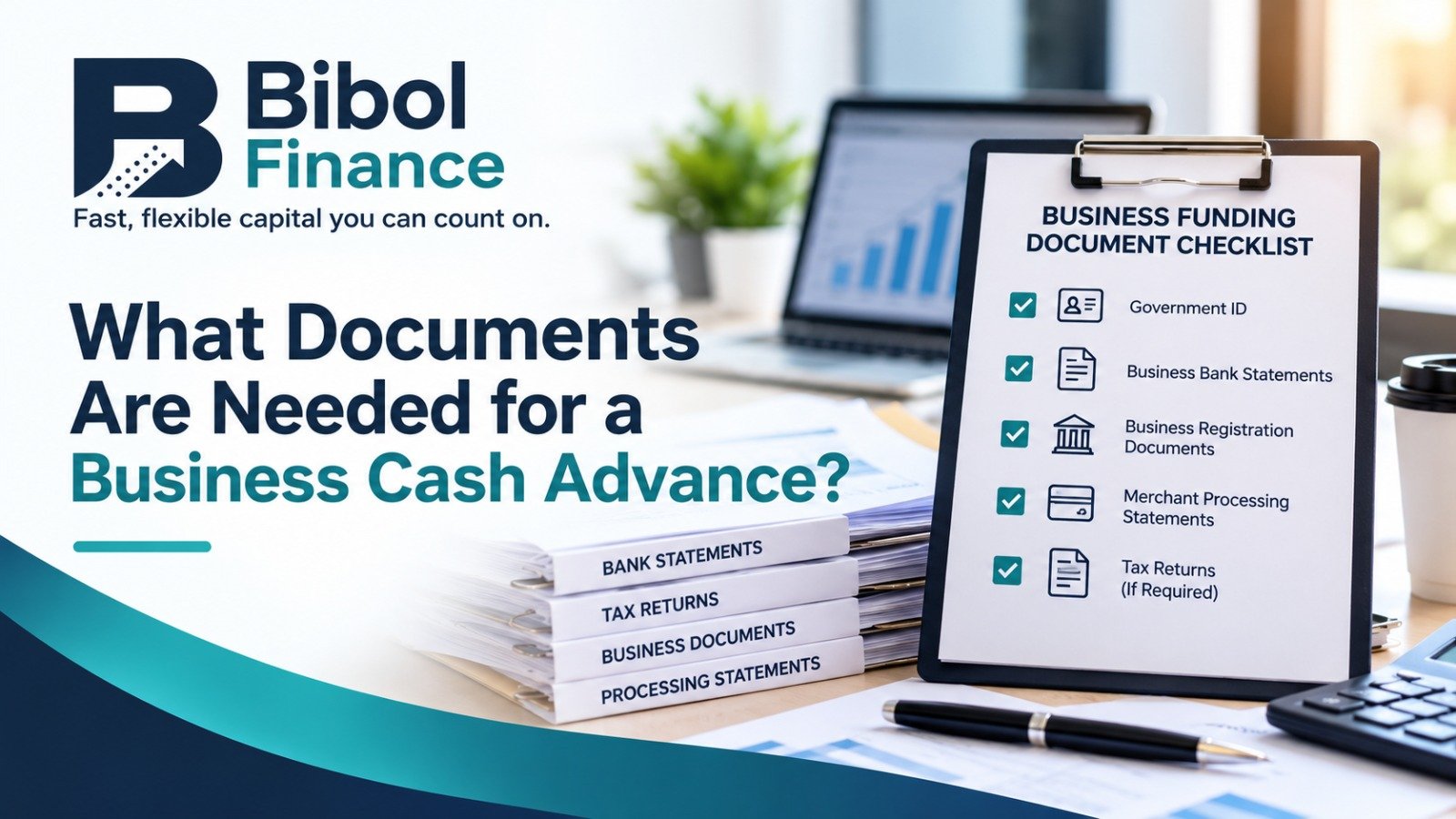
Here are the main documents you should prepare.
1. Completed Business Funding Application
The application is usually the first step in the business cash advance process.
You may need to provide:
- Legal business name and any registered trade name.
- Business address and contact information.
- Type of business and industry.
- Business start date.
- Employer Identification Number (EIN), where applicable.
- Owner and ownership information.
- Estimated monthly revenue.
- Requested funding amount and intended use of funds.
Make sure your information is accurate and consistent with your official business records. Incorrect business details can lead to additional questions and delays.
2. Recent Business Bank Statements
Business bank statements are among the most important documents in a merchant cash advance application.
Providers commonly request three to six months of recent statements, although the exact period varies. These records help them understand the company’s revenue, deposit patterns, regular expenses, and existing financial commitments.
Before submitting your statements, check that:
- All requested months are included.
- Every page is present.
- The business name and account details are visible.
- The statements are downloaded directly from your bank when possible.
- Any unusual transactions can be explained accurately.
Consistent business deposits may help a provider evaluate the company’s cash flow. However, strong deposits alone do not guarantee approval.
3. Government-Issued Photo Identification
Funding providers generally need to verify the identity of business owners or authorized signers.
Commonly accepted identification may include a valid driver’s license, state-issued identification card, or passport.
Check that your identification is current and that the name matches the information provided in your application. Depending on the provider, identification may be required from multiple owners.
Submit personal identification only through a verified, secure application channel.
4. Voided Business Check or Bank Verification Letter
A voided business check or an official bank verification letter may be requested to confirm the business bank account.
This information helps the provider verify the account used for funding and, where applicable, arrange repayments according to the agreement.
If you do not use paper checks, ask whether your provider accepts an official bank letter or another secure account verification method.
Never send banking information to an unverified contact.
5. Credit Card Processing Statements
Businesses that accept credit and debit card payments may be asked to provide recent merchant processing statements.
These statements show payment activity processed through the merchant services provider. They can help establish card sales volume and provide context about refunds, processing fees, and chargebacks.
Restaurants, retail stores, salons, and other businesses with substantial card sales may find these records particularly relevant.
If your business relies primarily on cash, bank transfers, or online payment platforms, ask the provider which alternative records it accepts.
6. Business Registration and Tax Identification Documents
Depending on your business structure and the provider’s requirements, you may need documents confirming that your business is legally registered.
These can include:
- Articles of Organization for an LLC.
- Articles of Incorporation for a corporation.
- A business license, where applicable.
- An EIN confirmation letter from the IRS.
- A registered trade name or DBA certificate, if applicable.
Sole proprietors may have different documentation requirements from LLCs and corporations.
Keeping these records organized helps verify your business identity and ownership.
7. Business Tax Returns and Financial Statements
Some providers request business tax returns, particularly for larger funding requests or applications requiring additional financial review.
You may also be asked to provide a profit and loss statement, balance sheet, or other financial records.
These documents help explain the business’s broader financial position, including revenue, expenses, assets, and liabilities.
Not every merchant cash advance application requires all these records. Ask your provider for a specific checklist before spending time collecting unnecessary paperwork.
8. Information About Existing Loans and Cash Advances
If your business already has loans, merchant cash advances, or other financing obligations, you may be asked to disclose them.
Providers may request current balances, repayment schedules, or payoff statements.
Providing accurate information is important because existing repayments can affect available cash flow and your ability to manage additional obligations.
Taking another advance to repay an existing advance can increase financial pressure. Consider the total cost and alternatives before entering into additional financing.
How to Prepare for a Business Cash Advance Application
Preparing your documents in advance can make the application process smoother.
Step 1: Create a document folder. Keep your bank statements, identification, registration documents, and relevant financial records in one secure location.
Step 2: Check for missing information. Review the application carefully and ensure that business names, addresses, and ownership details are consistent.
Step 3: Understand your funding needs. Calculate how much capital you actually require and identify the expenses it will cover.
Step 4: Review your cash flow. Consider whether your business can manage the proposed repayment structure alongside payroll, rent, supplier payments, and other essential expenses.
Step 5: Compare the terms. Review the total repayment amount, fees, payment frequency, reconciliation provisions, and consequences of missed payments before signing an agreement.
Common Mistakes That Can Delay Your Application
Even a straightforward application can require additional review if important information is missing.
Common mistakes include submitting incomplete bank statements, providing expired identification, entering inconsistent business details, and failing to disclose existing financing obligations.
Another mistake is assuming that approval or funding is guaranteed within a specific timeframe. Processing times depend on the provider, the completeness of your application, and any additional verification required.
Being organized can help, but it cannot guarantee approval.
How Bibol Finance Can Help You Explore Business Funding
Every small business has different financial requirements. A restaurant may need working capital for supplies, while a retail store may need funds to purchase inventory before a busy shopping season.
Bibol Finance is a point of contact for business owners exploring funding options. Preparing your documents and understanding your financial needs can help you have a more informed conversation about potential financing solutions.
Before proceeding, confirm the available products, eligibility criteria, costs, and terms directly with Bibol Finance.
Conclusion
Understanding what documents are needed for a business cash advance is an important step for any US small business owner considering additional working capital.
A completed application, recent business bank statements, government-issued identification, and bank account verification are commonly requested. Depending on the provider and application, you may also need merchant processing statements, business registration documents, tax returns, or details of existing financing.
The most important step is to prepare accurate records and evaluate whether the proposed funding arrangement fits your business’s cash flow and repayment capacity.
Need funding for your business? Contact Bibol Finance to discuss your requirements and explore the business funding options available to you.
Frequently Asked Questions
What documents are required for a merchant cash advance?
Common requirements include a completed application, recent business bank statements, government-issued identification, and a voided business check or bank verification letter. Additional documents may be requested.
How many months of bank statements are needed?
Many providers request three to six months of business bank statements. The exact requirement depends on the provider and your business profile.
Can I apply for a business cash advance with bad credit?
Some providers consider factors beyond credit scores, including business revenue and cash flow. However, eligibility varies, and approval is never guaranteed.
Are tax returns always required for an MCA?
No. Some applications may proceed using basic business and banking records, while larger or more complex applications may require tax returns and additional financial statements.
How can I avoid delays when applying?
Prepare complete, accurate documents, respond promptly to verification requests, and confirm the provider’s specific requirements before submitting your application.
BibolFinance
1065 SW 8th St #1010
Miami, FL 33130
Tel: 800-571-0857
Email: info@bibolfinance.com