Introduction: Keeping Your Trucking Business Moving
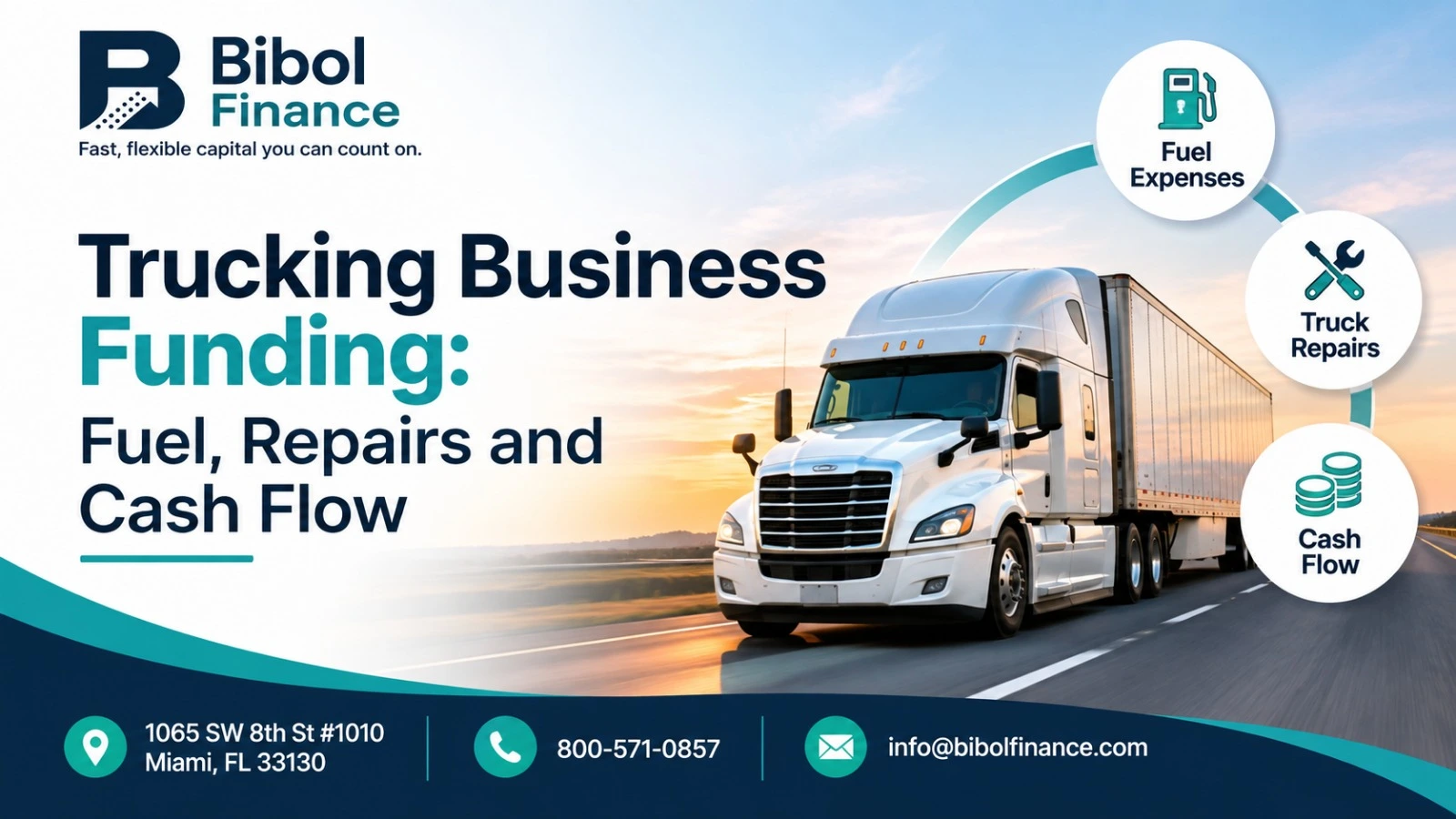
Running a trucking business in the United States is not just about transporting goods from one destination to another. It involves managing fuel expenses, driver payroll, insurance premiums, vehicle maintenance, tolls, and unexpected repairs. For independent owner-operators and fleet owners, these expenses can quickly become challenging, especially when payments from brokers and shippers take weeks to arrive.
Imagine completing several deliveries, paying for diesel, and covering driver expenses, only to discover that your customer will pay the freight invoice in 30 days. Meanwhile, your next load requires fuel, your truck needs maintenance, and your insurance payment is due.
This is a common cash flow challenge in the trucking industry.
That is why trucking business funding and working capital financing have become important topics for transportation companies looking to manage their daily operations.
Whether you operate a single truck in Houston, manage a small fleet in Dallas, run a freight company in Chicago, or provide logistics services in Los Angeles, understanding your funding options can help you make better financial decisions.
Bibol Finance helps business owners explore funding solutions that may support their working capital requirements, subject to eligibility and applicable terms.
Why Do Trucking Companies Need Business Funding?
The trucking industry operates on a unique financial cycle. Businesses often have to pay expenses before receiving payment for completed deliveries.
Here are some common reasons trucking companies look for additional working capital.
1. Rising Fuel and Diesel Expenses
Fuel is one of the biggest recurring operating expenses for trucking businesses. Long-distance transportation, changing diesel prices, and unexpected route changes can affect profitability.
An owner-operator may need to purchase fuel several times a week, while a fleet operator must manage fuel expenses across multiple vehicles.
Trucking fuel financing may help eligible businesses manage short-term fuel expenses without using all their available working capital.
2. Unexpected Truck Repairs and Maintenance
A truck breakdown can affect more than just transportation schedules. It can result in missed deliveries, lost revenue, driver delays, and additional repair expenses.
Common repair costs include:
- Engine and transmission repairs.
- Tire replacement and maintenance.
- Brake system repairs.
- Electrical system problems.
- Preventive maintenance and servicing.
- Refrigeration unit repairs for temperature-controlled trucks.
Having access to appropriate business capital may help trucking companies address urgent maintenance requirements and reduce operational interruptions.
3. Delayed Freight Payments
Many trucking companies work with brokers, freight forwarders, and shippers who operate on payment terms such as Net-30 or Net-60.
This creates a gap between completing a delivery and receiving payment.
During that period, businesses still need to pay for fuel, insurance, driver settlements, and other operating expenses.
Working capital financing can help eligible companies manage these timing differences while waiting for receivables.
4. Driver Payroll and Insurance
Paying drivers on time is essential for maintaining a reliable workforce. Trucking companies also need to manage commercial auto insurance, cargo insurance, permits, registration, and compliance expenses.
Additional capital may help businesses handle these recurring obligations when incoming payments are delayed.
Best Trucking Business Funding Options in the USA
Different trucking businesses have different financial needs. A single-truck owner-operator may require funding for an emergency repair, while a growing transportation company may need capital to manage several vehicles.
Here are some common financing options.
1. Merchant Cash Advance for Trucking Companies
A merchant cash advance (MCA) is a financing arrangement in which a provider advances funds in exchange for an agreed amount of future business receipts.
Depending on the agreement, repayments may be collected through a percentage of eligible receipts or scheduled withdrawals.
A trucking company with consistent business revenue may consider an MCA for fuel expenses, emergency repairs, payroll, or short-term operating requirements.
However, merchant cash advances can carry significant costs. Businesses should carefully examine the total repayment amount, factor rate, fees, payment frequency, reconciliation provisions, and default terms.
An MCA should not be treated as automatically affordable or as a replacement for every other financing option.
2. Trucking Business Loans
Traditional business loans provide a defined amount of capital that is repaid according to an agreed schedule.
They may be suitable for established trucking companies with qualifying credit profiles, financial records, and repayment capacity.
Depending on eligibility, businesses may also explore SBA-backed financing for approved working capital or expansion purposes.
3. Business Line of Credit
A business line of credit provides access to an approved borrowing limit. Companies can draw funds when necessary, subject to the agreement.
This may be useful for recurring expenses such as fuel purchases, maintenance, and unexpected operational costs.
4. Freight Invoice Factoring
Freight factoring allows trucking companies to sell eligible unpaid invoices to a factoring company in exchange for an advance, less applicable fees.
It can help bridge the gap between delivering freight and receiving payment from brokers or shippers.
Trucking businesses should compare factoring fees, advance rates, contract conditions, and any recourse obligations before choosing a provider.
Trucking Business Funding in Major US Cities
Transportation businesses across the United States face different operating challenges, but fuel expenses, maintenance, and delayed payments are common concerns.
Houston, Texas: Trucking and logistics businesses may need working capital to manage fuel, repairs, driver payroll, and transportation-related expenses.
Dallas, Texas: Freight carriers and independent truck operators may explore funding options to manage fleet operations, vehicle maintenance, and expansion requirements.
Los Angeles, California: Transportation companies handling port-related freight and regional deliveries may need additional capital to manage operating costs and payment delays.
Chicago, Illinois: Freight transportation businesses may require funding to manage vehicle maintenance, insurance, and day-to-day logistics expenses.
Atlanta, Georgia: Trucking companies serving regional distribution networks may explore working capital options to manage driver payments and fuel requirements.
New Jersey and New York: Freight carriers and logistics operators serving major commercial distribution areas may need additional capital to maintain operations and meet delivery schedules.
These are examples of potential business financing needs, not guarantees of local funding availability. Eligibility depends on the individual business and provider.
How Can Trucking Companies Qualify for Business Funding?
Although requirements differ between providers, trucking businesses may be asked to demonstrate their operating history, revenue, and ability to manage repayments.
Common evaluation factors include:
- Business revenue: Recent bank deposits and business income.
- Operating history: How long the trucking company has been active.
- Credit profile: Personal or business credit, depending on the financing product.
- Existing obligations: Current loans, advances, and other repayment commitments.
- Business documentation: Registration and transportation-related records, where applicable.
Providers may request three to six months of business bank statements, government-issued identification, EIN information, MC or USDOT details, insurance certificates, and freight settlement records.
Not every funding product requires every document. Always confirm the provider’s specific requirements before applying.
How to Apply for Trucking Business Funding
Getting prepared before applying can make the process easier.
Step 1: Calculate your funding requirements. Determine whether you need money for fuel, repairs, payroll, insurance, or other expenses.
Step 2: Review your business cash flow. Examine recent revenue, operating expenses, outstanding invoices, and existing repayment obligations.
Step 3: Prepare your documents. Organize your business bank statements, identification, registration details, and relevant freight records.
Step 4: Compare financing options. Review total costs, repayment schedules, fees, and contractual conditions.
Step 5: Submit your application. Provide accurate information and respond to any verification requests.
Step 6: Review the agreement. Make sure your business can manage the repayments even if freight volumes decline or customers pay late.
How Bibol Finance Can Help Trucking Businesses
Every trucking company has its own financial challenges. An independent owner-operator may need capital for an unexpected engine repair, while a small fleet may need working capital to manage fuel, insurance, and driver payroll.
Bibol Finance provides a point of contact for business owners exploring financing options.
If you operate a trucking company, freight transportation business, or logistics enterprise, you can contact Bibol Finance to discuss your funding requirements and explore available options.
Before accepting financing, carefully review the total repayment amount, payment frequency, fees, and applicable contractual obligations.
Conclusion: Keep Your Trucking Business Moving Forward
A successful trucking business requires more than finding loads and delivering goods on time. It also requires careful financial planning and the ability to manage expenses between payments.
Fuel costs, unexpected repairs, driver payroll, insurance, and delayed freight invoices can create cash flow pressure even for established transportation companies.
Small business loans, business lines of credit, freight factoring, and merchant cash advances may provide different ways to address these challenges.
The right choice depends on your business revenue, financing needs, repayment capacity, and the total cost of the funding.
If your trucking business needs additional working capital to manage fuel, repairs, or everyday operations, contact Bibol Finance to discuss your requirements and explore available business funding options.
Contact Bibol Finance
Bibol Finance
Fast, flexible capital you can count on.
Address:
1065 SW 8th St #1010, Miami, FL 33130, USA
Phone:
800-571-0857
Email:
info@bibolfinance.com
Explore your trucking business funding options today. Contact Bibol Finance to discuss your business needs and learn about applicable financing options and eligibility requirements.
All funding is subject to underwriting, approval, applicable terms, and eligibility criteria.
Frequently Asked Questions
Can trucking companies get a merchant cash advance?
Some trucking companies may qualify for a merchant cash advance based on business revenue, bank deposits, operating history, and other underwriting criteria.
Can I use business funding to pay for diesel and fuel?
Depending on the financing agreement, business funding may be used for eligible fuel expenses and other operating costs.
Can owner-operators apply for trucking business funding?
Owner-operators may qualify for certain business financing products, depending on their business structure, revenue, operating history, and the provider’s requirements.
What documents are required for trucking business funding?
Commonly requested documents include business bank statements, identification, business registration details, EIN information, and, where applicable, MC or USDOT details, insurance certificates, and freight settlement records.
What is the difference between freight factoring and a merchant cash advance?
Freight factoring involves selling eligible unpaid invoices to a factoring company. A merchant cash advance involves receiving an advance in exchange for an agreed amount of future business receipts. Their costs, repayment structures, and contractual obligations differ.
How can I manage cash flow in my trucking business?
Monitor cost per mile, plan fuel expenses, maintain a repair reserve, track unpaid freight invoices, manage driver payroll, and compare financing options before taking on additional repayment obligations.